
Modern talent systems design, built for the AI era.
Most talent teams I talk to bought the AI tools and still don't have a system to run them in.
I'm Matt Staney, and I help talent leaders redesign how hiring gets done, from the operations underneath it to the story candidates hear and the way recruiters spend their day. Inside the tools you already own.
Whose experience is breaking first?
Your team is being asked to do more with less. Good systems and smart orchestration should carry it.
That's what's underneath almost every conversation I have with talent leaders right now. Teams got leaner while the hiring plan held steady or grew, and leadership bought AI tools with a mandate to use them and no plan for how the work itself should change. So recruiters end up doing the system's job, chasing calendars and double-checking what the tools got wrong, and the time that gets squeezed is the time they should be spending with candidates and hiring managers.
I build the systems and workflows that carry that load, so your team can take on more hiring without burning out and your recruiters get back to the part of the job that was always the point.
The tools aren't the problem. Nobody built the system they're supposed to run in.
Three pillars, each one an experience your company already has
Every hiring function runs three experiences at once, whether anyone designed them or not. Each one starts with an audit or a discovery, because I don't design anything I haven't watched your team do first.
Recruiting Operations
How hiring actually gets done. The workflow, the stack, the data, the AI governance and a capacity model finance will sign. It starts with the Recruiting Operations Audit, two to four weeks.
Employer Brand
How your company shows up before a recruiter ever calls. An EVP built as a living system that feeds job descriptions, outreach and sourcing, then carries through the whole talent lifecycle with AI tools that keep every team on brand. It starts with the Employer Brand Audit, two to four weeks depending on your size.
Recruiter Enablement
How your recruiters work inside the new system. Hands-on labs and playbooks for the tools they already have. It starts with a one to two week discovery.
What talent leaders keep telling me
I've had hundreds of candid conversations with talent leaders across the US this year. The details may change from company to company. The patterns don't.
The headcount plan changes every month, sometimes every week, and the work itself is changing faster than anyone can rewrite the job description.
The AI tools are bought, and nobody can say what they returned.
Verification has quietly become part of the job, and nobody owns it.
TA keeps picking up more of the employee lifecycle, and the team didn't grow with it.
TA finally has a seat at the table. What it doesn't have is time to keep up with how fast the work is moving.
Every recruiter tells a different story about why someone should join, and now an AI answer tells candidates its own version.
Audit, design, deploy
I scope and price the first phase only. Every readout ends with one recommended next step, and you decide whether to take it.
Audit
Two to four weeks inside your systems and with your people. A readout your executives can read in ten minutes and a 90-day plan your team can run.
Design
Workflows for AI and human work, the stack, governance, the EVP system. Built in what you already own.
Deploy
Your team learns to run it, or I stay on in a fractional seat while they do.
Underneath all of it is the Talent Operating System, the method I use to connect hiring to everything else a company knows about its people. See the Talent Operating System →
The work, in numbers
Boston Consulting Group · Siemens Energy · Calendly · Discord · Gong · GoDaddy · GE Digital · Opendoor · Postmates · UT Health East Texas
The community side of my work
I've been building practitioner communities since 2012, when I started Talent Brand Alliance. In January 2027 it becomes one of three communities under Talent Alliance.
One rule holds across all of them. No pitches and no vendors on stage, and that includes me.
Talent Brand Alliance
For the storytellers.
Talent Leadership Alliance
For the executives who own the function and set its strategy.
Talent Ops Alliance
For the people who build the systems.
My weekly read on how AI is changing work
Roles, skills and hiring. What I'm seeing, what I think it means, and where I could be wrong.
Who you'll work with
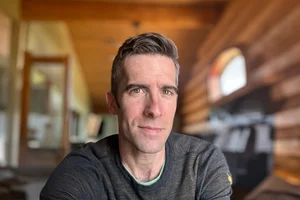
I'm Matt Staney. I've spent nearly 20 years in talent acquisition, first in-house at VMware, SAP SuccessFactors, Glassdoor and Twilio, then building Proactive Talent from 2015. When you hire Proactive Talent you get me on the work, not a junior team behind a sales call.
Questions about Proactive Talent
What does Proactive Talent do?
Who does Proactive Talent work with?
How does Proactive Talent approach AI in recruiting?
Is Proactive Talent a staffing firm or an RPO?
Where does an engagement start?
What is the Talent Operating System?
Tell me what's going on
Thirty minutes, no deck. You tell me what's broken, I tell you honestly whether I'm the right person to fix it.